How often to water garden beds, shrubs and new trees
Knowing exactly how often to water can save water and keep plants healthy. Learn the watering schedules for new trees, shrubs and garden beds by plant type.
- Written and checked byCordelia Hudspeth
- 6 minutes to read it all

Newly planted trees need water daily for the first one to two weeks. Established shrubs and trees might only need a soak once or twice a week. Knowing how often to water can save money on your utility bill and help prevent plant loss in the yard.
Why young roots require frequent soaking
New root systems sit in a small ball of nursery soil. The root ball and the surrounding backfill can hold different amounts of moisture. Small plants depend heavily on the moisture in that original root ball.
Colorado State University Extension notes a tree with a one inch trunk caliper takes 12 to 18 months to establish its roots after planting. The roots eventually spread wide into the native earth to seek out damp pockets. You have to provide consistent moisture while those roots grow outward.
Established plants have spread roots that can reach more soil moisture during dry periods. You can water established plants less often and save gallons of municipal water.
Relying on daily light sprinkles harms mature yard plants. Shallow watering forces the roots to stay right at the soil surface. Surface roots dry out fast and leave large shrubs vulnerable to summer heat.
Watering schedules and volume for newly planted trees
You start a strict watering routine the day you put a sapling in the ground. Colorado State University Extension says to water a newly planted tree daily for the first one to two weeks. Check that the soil is dry before each watering.
Drop the frequency to every two to three days through week 12. CSU Extension warns never to irrigate saturated soil, since too much water per session can waterlog the planting hole in compacted or clay soil.
Switch to watering weekly until the roots establish. A steady weekly schedule pushes the moisture deep into the earth. Deep moisture encourages the roots to grow downward rather than creeping along the surface.
Measuring the trunk caliper helps you find the correct water volume. CSU Extension suggests about 1 to 1.5 gallons of water per inch of trunk caliper at each watering for a new tree.
Time Since Planting | Watering Frequency | Volume Per Inch of Trunk Caliper |
|---|---|---|
First one to two weeks | Daily | 1 to 1.5 gallons |
Through week 12 | Every two to three days | 1 to 1.5 gallons |
After week 12, until established | Weekly | 1 to 1.5 gallons |
Pour the measured amount directly over the rootball and the immediate surrounding soil. Fast streams from a garden hose often run off into the grass. You waste paid municipal water when it runs away from the tree base.
When to water established shrubs and perennials
Mature plants survive dry periods much better than tender young saplings. Clemson Extension says established shrubs, trees and perennial fruits may need water only once or twice a week. Spacing out your watering days can lower your monthly utility charges.
Deep watering creates tough, resilient perennial beds. You apply enough water to soak the ground deep below the surface. The moisture stays trapped in the deep soil long after the top layer dries out.
The best time to water plants is early in the morning. Morning application gives the plant time to drink before the midday sun hits. Wet leaves dry off quickly in the morning breeze and avoid fungal spots.
Evening watering leaves foliage wet overnight and invites mildew problems. Setting up drip irrigation keeps the leaves completely dry while watering the roots directly.
Watering garden vegetables through the summer
Vegetables grow fast and consume heavy amounts of moisture to produce food. Illinois Extension says a garden needs about an inch of water a week.
An inch over one square foot is about half a gallon. You can set empty flat cans around the vegetable patch to measure the sprinkler output. You turn off the sprinkler when the cans fill to the correct depth.
Hot weather changes the math for your vegetable patches. The required volume rises to two inches when temperatures top 90°F. Plants lose moisture through their leaves rapidly on scorching summer afternoons.
Soil type dictates how to water plants effectively. Clemson Extension says vegetables in clay soil may need watering two to three times a week.
Checking the soil moisture by hand
Check the soil before each watering. Dig a small, shallow hole near your plant base. Grab a handful of the dirt from the bottom of the hole.
Squeeze the handful of dirt into a tight ball. Wet soil holds its shape and leaves a muddy residue on your palm. You can wait another day to water when the ball stays firm.
Dry dirt crumbles apart the second you open your hand. A crumbly texture suggests the bed may need water.
Paying attention to the leaves helps you adjust your watering schedule. Wilting foliage in the late afternoon often signals severe moisture loss. Check the soil to confirm the plant needs a drink.
Yellowing leaves that drop off early can point to soil that stays too wet. Constantly saturated dirt starves the root system of required oxygen. You back off your schedule and let the top layer of dirt dry completely.
Delivering water slowly for deep root growth
Fast water delivery runs off into the yard and is wasted. Heavy hose streams compact the dirt and wash away the topsoil. You want the moisture to sink straight down into the root zone.
Soaker hoses weep moisture slowly along their entire length. You lay the porous hoses in rings around your established shrubs and trees. The slow weeping action allows hard clay soil to absorb the liquid without runoff.
Connecting a soaker hose to a timer automates your early morning schedule. You set the dial to run for a short time before the sun comes up. Using harvested rain through a simple drip line can cut your utility usage further.
Watering bags provide an easy solution for newly planted street trees. You zip the heavy plastic bag around the trunk and fill it once. The bag slowly drains its water through tiny pinholes over several hours.
Match each bag's fill to the gallons per inch of trunk caliper above, and refill it on that tree's own schedule.
Covering bare dirt to reduce watering days
Bare dirt bakes in the sun and loses expensive water to evaporation. A thick layer of wood chips shades the ground and traps the dampness underneath. The covering cools the root zone.
Spread a thick layer of organic material over your garden beds. Leave a gap of bare dirt around the plant stems to prevent rot. CSU Extension says never to pile mulch against a trunk.
Organic mulch breaks down over time, so top it up as it thins. Consistent coverage cuts evaporation and stretches the time between your watering days.
Using your own yard waste provides free mulch for the vegetable beds. Dried grass clippings and shredded autumn leaves cost nothing and hold moisture well.
More to check around the house
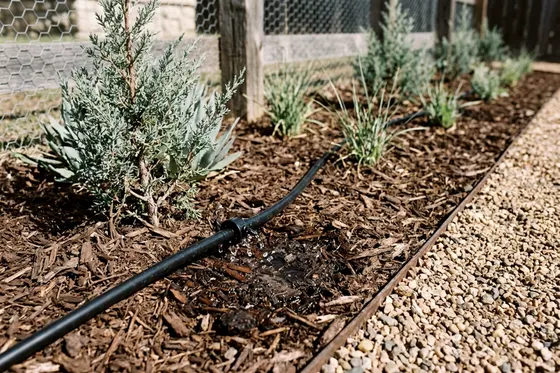
How to make a thirsty yard drought tolerant one bed at a time
Replacing one flower bed at a time to build drought tolerance saves water and can trim your monthly utility bill without digging up your entire yard.
7 minutes to read it all
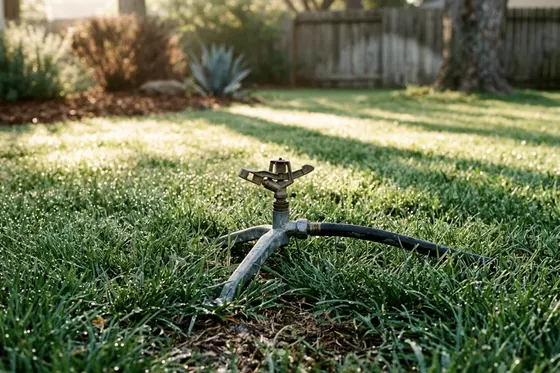
The best time to water your lawn and how long to run it
Find the best time to water lawn grass to lower your water bill. Learn how to test your soil, measure sprinkler output and set proper run times.
6 minutes to read it all
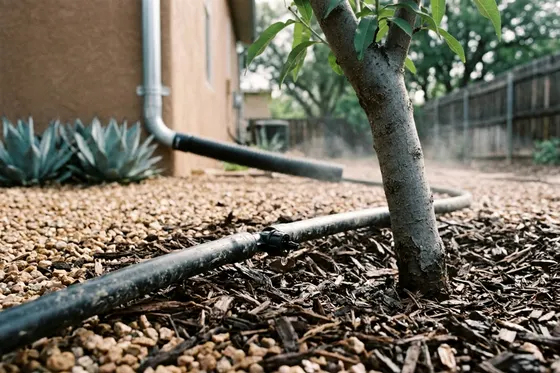
Can you water your yard with graywater where you live
A graywater irrigation system sends laundry water directly to your yard to reduce household water use. Learn the rules for California, Texas and Arizona.
6 minutes to read it all