Rain barrel rules to check before you buy one
Before you start rain harvesting at home, read up on your state and local regulations to find out exactly what size and type of barrel is allowed.
- Written and checked byCordelia Hudspeth
- 5 minutes to read it all
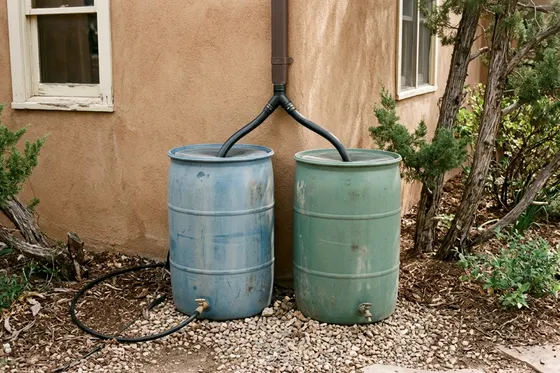
State laws in places like Colorado and Utah cap how much rain barrel storage a household can have. Before you buy barrels for rain harvesting, check the state cap, your local utility's rules and your HOA's rules. A setup only makes sense if it follows the rules that apply to your property.
Why some Western states regulate rain barrels at all
Water rights can affect how much runoff property owners may capture in some western states. Rules differ from state to state, so what is allowed in one place may not be allowed in the next. Colorado State University Extension notes that collecting rain in a barrel there does not create a water right.
Colorado and Utah both let households collect a limited amount of rainwater and use it outdoors on their own property.
Your city or county may add its own rules on top of the state's, so ask your local code office before you build.
Colorado and its two barrel, 110-gallon limit
A household in Colorado may use no more than two rain barrels with a combined storage of 110 gallons. Colorado State University Extension outlines this specific capacity cap for residential properties. The state also restricts how you may use the captured water.
Colorado rain barrel water must be used outdoors on the property where it was collected. The water cannot be moved to another lot. The captured runoff cannot be used for drinking or other indoor household uses.
That means watering plants and soil on your own lot. Colorado barrels may only collect water from rooftop downspouts, so two barrels can sit under two different downspouts, with a hose or watering can carrying the water to nearby beds.
Utah and when you need to register your containers
Utah permits a larger residential collection volume but requires paperwork for bigger setups. Rainwater containers sitting on one parcel cannot exceed 2,500 gallons in total capacity. That is far more than Colorado's 110 gallons.
Free registration with the Utah Division of Water Rights is required for more than two containers. The same applies to any single container over 100 gallons. Registration is free and goes through the Utah Division of Water Rights.
Your yard can skip the registration step entirely if you stick to one or two smaller barrels. Two containers of 100 gallons or less each do not need registration. A container over 100 gallons needs that free registration.
Texas, its sales tax break and what an HOA can still restrict
The state of Texas offers a sales tax break on rainwater harvesting equipment. Texas Tax Code section 151.355 exempts rainwater harvesting equipment and supplies from Texas state sales tax. The Texas Water Development Board describes this break.
Texas homeowners associations have limited say over whether you install a rain barrel. Texas Property Code section 202.007 bars a property owners association from enforcing rules that prohibit rain barrels or a rainwater harvesting system. This state protection comes from legislative amendments passed into law in 2011 and 2013.
Under that Texas law, an association may still refuse barrels placed between the front of the home and the street. The board can also require a container color that remains consistent with the house exterior.
An association may also regulate the size, type, shielding and materials of a barrel that can be seen from a street, another lot or a common area.
Comparing the strict limits in Colorado and Utah
The storage rules differ by state. A side-by-side look at the Colorado and Utah limits shows how far apart they are, which helps you plan before you buy any hardware.
State rule | Capacity limit | Container limit |
|---|---|---|
Colorado | 110 gallons combined storage | No more than two rain barrels |
Utah | 2,500 gallons in total on one parcel | Free registration over two containers or any container over 100 gallons |
Check the limits that apply to you, from your state, city and HOA, before you buy hardware.
Rules your city, HOA or water utility may add
Cities and utilities may add their own rules on top of state law. A permit could be necessary before you hook up a rain barrel to your home exterior. Ask the building department whether the city sets distances from your property line.
Ask your water utility whether it has requirements for securing a barrel or handling overflow. A neighborhood association can answer how you must handle the visual impact of your new outdoor equipment.
Ask the local code office about its guidelines before you start installing anything. An early conversation with the utility can save you from changing your setup later in the summer. Your zoning and local rules may differ from the state's.
Why barrel water is for plants, not drinking
Roof runoff can pick up bird droppings, dust and shingle debris on its way down the gutters. Barrel water is untreated, and Colorado State University Extension says untreated roof rainwater is not safe to drink. Your household should keep this untreated water for landscaping and container gardens.
A simple electric pump lets you run drip irrigation from a rain barrel directly to your flower beds. A watering can also works for moving the water around the yard.
Before you use barrel water on food plants, ask your local extension office whether it is advised. Your exterior hose lines should clearly indicate they carry untreated roof runoff. Clear markings can help keep guests and children from drinking the captured moisture from a yard spigot.
How to check the rules where you live before you buy
Start with a call to your local water utility. A utility representative can tell you whether it has any rules on rain barrels. Your city building department handles questions about physical placement and property line distances.
A short call can keep you from buying a system your city does not allow. Property owners inside an association must read their neighborhood bylaws before shopping. Ask whether your association requires approval for visible changes to your home exterior.
Your city or county website or building department is the place to ask about permits. Keep a copy of every approval and permit before you alter a downspout.
More to check around the house
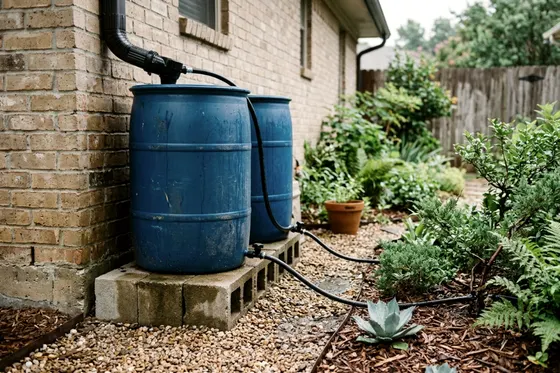
How big a rain barrel does your garden need
Estimate the size of a rain barrel for garden beds by measuring your roof drainage area and matching the water volume to your outdoor plants.
5 minutes to read it all
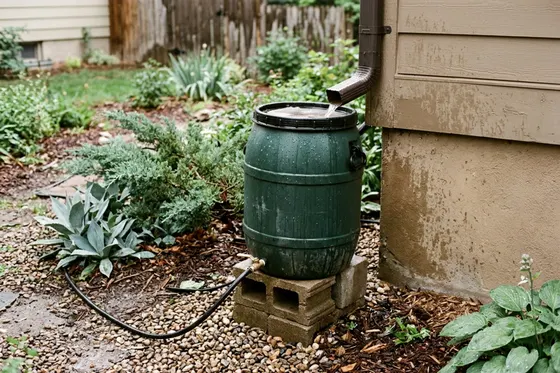
How to hook up a rain barrel with a downspout diverter
Hook up a rain barrel diverter to your downspout with these simple steps and start collecting free rainwater to water your garden through summer.
6 minutes to read it all
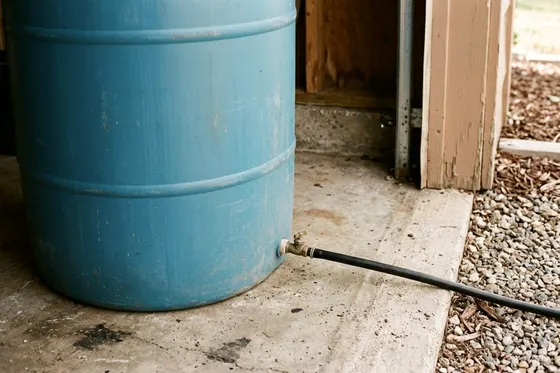
Build a DIY rain barrel from a food-grade drum in 7 steps
Build a DIY rain barrel from a food-grade drum to save water at home. Follow these seven simple steps to drill, seal and screen your homemade system.
7 minutes to read it all