How to find a water leak underground with your meter
Learn how to find a water leak underground with your meter to save money on utility bills and stop yard damage before the problem requires major pipe repair.
- Written and checked byHarlan Clevenger
- 7 minutes to read it all

A water meter that keeps moving when every faucet is off points to a possible leak. Pinpointing the location takes an afternoon of simple tests to isolate the buried supply line from your indoor plumbing. Catching it early also stops you paying for water you never use.
Signs water is escaping between the meter and the house
A sudden spike in your utility bill is usually the first clue that water is escaping. Most municipal bills show your usage in thousands of gallons, making it easy to track changes month over month. If a family of four uses more than 12,000 gallons a month in winter, EPA WaterSense says there could be serious leaks. Winter usage sets a baseline because sprinkler systems and outdoor hoses sit idle.
WaterSense says the average household's leaks can waste more than 9,300 gallons a year. The problem grows much larger for a few homeowners, since nine percent of homes have leaks wasting 50 gallons or more a day.
A water leak under the house or in the yard often goes unnoticed until the utility company flags the high usage. Catching a buried line failure early limits damage to your foundation. Continuous moisture pooling near a basement wall can build hydrostatic pressure, which can crack concrete blocks and invite mold into your crawlspace.
Rule out a leaking toilet with a dye test first
Indoor fixtures mask themselves as underground leaks by draining water silently down the sewer line. A flapper valve in a bathroom tank frequently fails and allows a continuous flow of water directly into the bowl. Ruling out this common issue saves you from digging up your yard for no reason.
WaterSense recommends a simple toilet test using a few drops of food coloring in the tank. Color in the bowl after 10 minutes means a leak. Flush the toilet right after the 10 minutes pass to keep the dye from staining the tank.
You can replace a worn rubber flapper and fix the problem entirely.
Outdoor fixtures also require a quick physical inspection before you blame the buried pipes. Look over places an outdoor spigot leaks to confirm those connections are tight. A worn washer in a garden hose bib creates a steady drip that adds up over a billing cycle.
How to run a two-hour meter test with every faucet off
The water meter sits in a concrete box near the street or inside your basement, depending on your local climate. This device measures every drop flowing onto your property from the municipal supply. A water leak test relies on reading the numbers or watching the small indicator dial when no one is using the plumbing.
Shut off all showers, washing machines, dishwashers and irrigation systems. Check that automatic ice makers and water softeners are not running a cycle. WaterSense says to check your water meter before and after a two-hour period when no water is being used. Any change means you probably have a leak.
Many analog meters feature a small triangle or star shaped dial called a flow indicator. This tiny gear spins even with a very small trickle. Seeing this dial move while the house is quiet confirms water is moving through the line.
Some digital meters need a button press or a flashlight to wake up the screen. Check your meter's instructions or ask your utility how to read the display.
Close the main shutoff to tell an indoor leak from a buried one
Finding a leak requires isolating different zones of your property to narrow down the source. The main water shutoff valve typically sits where the pipe enters your home. You will find it in a basement, a crawlspace or mounted on an exterior wall. Closing this valve traps the pressure inside your house and isolates the buried service line outside.
Turn the indoor shutoff valve clockwise until it stops. A lever style ball valve requires a quarter turn so the handle sits perpendicular to the pipe. A round gate valve requires several full turns to lower the internal brass gate.
Go back to your meter at the street and check the flow indicator again. A spinning dial with the house valve closed suggests water is escaping between the meter and the house, so the leak is probably in the buried line.
A dial that stops spinning when you close the house valve indicates the leak lives somewhere inside the building. An indoor issue usually points to dripping sinks, a hidden pipe in a wall or a failing pressure relief valve on a water heater. Taking time to run through these water conservation fixes keeps minor drips from inflating your bill.
Read the yard for soggy patches, sunken spots and greener grass
A confirmed leak in the main service line means water is saturating the soil outside. Walking the path from the meter to your house helps you locate an underground water leak. The signs show up on the surface if you know what to observe.
Look for unusually green patches of grass during dry weather. Constant moisture acts as a steady fertilizer and keeps a specific area of the lawn thriving while the rest turns brown. Soft, muddy spots in the yard also point to pooling water beneath the dirt.
Watch for sunken areas along the pipe route. Water eroding the soil creates voids that eventually collapse and leave depressions in the turf. Walking the yard slowly helps you feel soft ground yielding under your boots.
Paved surfaces reveal clues about buried pipe failures. A crack in a pipe under a concrete driveway might push water up through the expansion joints. You might also notice a constant damp stain on the pavement or algae growing on the concrete.
Contact 811 before anyone digs to find the line
Excavating a water line involves real danger if you strike a buried electrical cable or gas pipe. You must secure utility markings before pushing a shovel or a backhoe into the ground. A single wrong strike can cause serious injury and knock out service to your neighbors.
811 is the free national before you dig service. It asks you to make contact a few business days before any digging so utilities can mark their lines. Operators route your request to local power, gas and telecom companies.
Utilities then mark the approximate location of their buried lines with paint or flags.
These marks show only the approximate location of buried lines, so dig carefully around them. Homeowners can submit the request themselves through 811 or their state's 811 center website.
Which side of the meter is yours to repair, and who to call
Responsibility for a broken pipe depends on exactly where the failure occurs. The utility company usually owns the main pipes running down the street and the meter itself. A leak on the street side of the meter box usually belongs to the city or water district.
Homeowners often own the private service line from the meter connection into the house, but the boundary varies by utility, so ask yours exactly where it sits. A failure on your side usually means hiring a plumber and paying for the repair.
Call the utility company first if the meter box itself is flooded with water. A municipal worker can inspect the city side of the connection for loose fittings or failed gaskets. The utility can help work out whose side is leaking.
Call a licensed plumber to fix anything on your private property. Keep your water bill handy and ask your utility whether it offers any adjustment for a leak.
Repair options to discuss with a plumber
Replacing an underground water line involves heavy labor and specialized equipment. A plumber will inspect the pipe material, the soil depth and the location of the break to recommend a course of action. Older homes can have galvanized steel lines that corrode from the inside and may need complete replacement.
A point repair works well if a tree root broke a small section of an otherwise healthy copper or plastic pipe. The crew digs a single hole, cuts out the damaged section and installs a new piece with tight couplings. This approach costs less upfront but leaves the rest of the aging pipe in place.
Trenching involves digging a continuous ditch from the meter to the house to lay a brand new pipe. This method guarantees a completely new line but destroys landscaping and requires heavy machinery in your yard. Replacing a long driveway or a mature tree adds to the final bill.
Trenchless replacement avoids destroying your entire lawn or hardscape. Plumbers dig two small access holes and use a hydraulic machine to pull a flexible, continuous pipe through the path of the old line. Ask the plumber how long each pipe material lasts.
More to check around the house
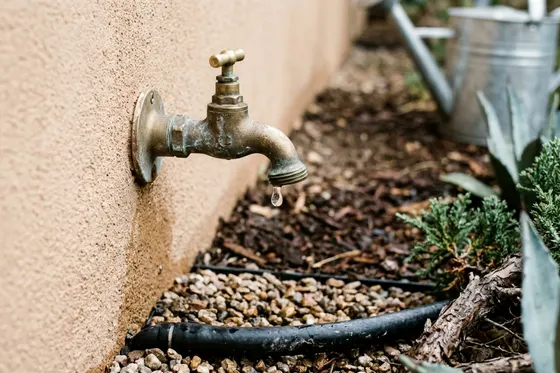
5 places an outdoor spigot leaks and how to fix each one
Find exactly where your leaking garden spigot wastes water and fix the specific worn washer, loose nut or broken pipe causing the problem.
6 minutes to read it all
8 water conservation fixes ranked by the gallons they save
Finding the best water conservation fixes means looking at the numbers. These eight household upgrades and repairs rank by the gallons they save each year.
5 minutes to read it all
Do water leak detectors earn their price
Find out if a water leak detection device pays for itself by catching drips early before they damage your home and run up your water bill.
6 minutes to read it all